Episode 20 – How to be a Hustler

Hello, Creatives!

In 2008, Beyoncé coined the phrase “a diva is a female version of a hustler”.

In all her super-star enriched glory, Beyonce may be right, but I had the pleasure of chatting with a self-declared “hustler” from Adelaide, Australia.

Since meeting Tiffany Rouge whilst she studied in the UK, she’s returned to the land down under and found herself the Marketing and Events Coordinator for the Hotel Richmond in Adelaide.

Screen Shot 2015-10-26 at 16.33.33

Click here to listen to Tiffany Rouge on Episode 20

“I have worked damn hard to get where I am. And I have hustled… A hustler just does stuff, they get stuff done, by any means possible. And I think that’s my superpower.”

Since this episode of 99% Perspiration was recorded, Tiffany has also been taken on as a radio producer at Fresh 92.7, and continues to organise fashion & clothing events in Adelaide.

Also joining us for Episode 20, Ed Westman brings some of his best advice for aspiring filmmakers – and in terms of getting your name out there, he can teach you how to “hustle” like the best.

Screen Shot 2015-10-26 at 16.33.07

Click here to listen to Ed Westman on Episode 20

“In a way, making a show-reel is redundant… You’re better off putting your work into a big portfolio, on a website, because then people will be able to see on a project by project basis what your skills are.”

Alongside freelancing as a Video Content Creator based in Sunderland, Ed is the Video Producer with the University of Sunderland’s Marketing and Communications department.

And until next time,

Stay productive, stay awesome!

Episode 19 – Making the Most of your Creative Degree

It’s somewhat ironic that what followed the episode entitled “Never Stop” was an absence of podcasts for an entire month. Let me start with an apology. I’m one-man-band; making this podcast alongside everything else in my life. I’ve started a new semester at the University of Sunderland, where I’m now lecturing three radio/journalism classes, which has taken up a great deal of time & energy. I’m also working for the arts networking organisation ArtWorks-U, making occasional videos for the university, producing four weekly radio broadcasts, and sporadically working on a handful of other projects.

Life is chaotic, unpredictable and hectic… And I love it.

As such, I put 99% Perspiration on the back burner. To my own detriment, as much as yours. It’s not good practice, I know. But. The show must go on.

You can expect weekly episodes from 99% Perspiration once again.

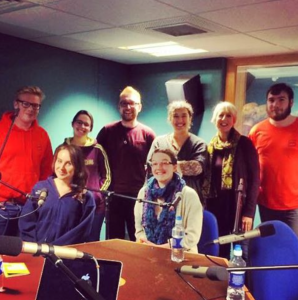
Episode 19 is the very first live special of 99% Perspiration. It was broadcast during Freshers’ Week at the University of Sunderland, where I work as an Academic Tutor of radio. They invited us to create a special, live, one-off programme tailor-made to incoming students – “Making the Most of your Creative Degree”.

Click here to listen to Episode 19

Click here to listen to Episode 19

A big thanks is in order for Matthew Donnachie and Grant Lowery, who were our sound-designers on the project.

I’d love to hear back from you about whether this is useful (or not) if you’re not based at the University of Sunderland – our Twitter is @99Podcast.

———-

Our guests on Episode 19:

Click here to listen to Jill on Episode 19

Click here to listen to Jill on Episode 19

Jill Kirkham is the Programme Leader of Fashion Product & Promotion at the University of Sunderland, and there are tons of opportunities and tips available for fashion students which will be applicable to fashion-conscious listeners.

Click here to listen to Lily in episode 19

Click here to listen to Lily in episode 19

Lily Clifford is the Learning and Engagement Officer at the National Glass Centre, based in Sunderland.  Lily began volunteering at the NGC whilst she studied at the University, and this volunteering experience led her straight into her current role.

Click here to listen to Sarah on Episode 19

Click here to listen to Sarah on Episode 19

Sarah Heseltine is currently a Graduate Intern within the Student Recruitment team at the University of Sunderland.  She joined us to give us insight into extra-curricular opportunities at the University; in particular the Student Ambassador scheme which she was involved in.

Click here to listen to Episode 19

Click here to listen to Sinèad on Episode 19

Sinèad Livingston is a graduate from BA Community Music, in partnership with the Sage Gateshead.  She’s currently setting up a musicians’ creative network, and working alongside me on a radio programme called ArtyParti on Spark FM (Wednesdays at 3pm) – and you can hear more from Sinèad on episode 4 of 99% Perspiration.

Click here to listen to James on Episode 19

Click here to listen to James on Episode 19

James Hamilton is currently studying BA Journalism at the University of Sunderland, and currently presents Drive Time on the student/community radio station Spark FM.

Click here to listen to Rute Correia on 99% Perspiration

Click here to listen to Rute Correia on 99% Perspiration

And Rute Correia, who you can hear more from in Episode 18 of 99% Perspiration, is an incoming student of MA Radio (Production and Management).  She previously studied at Universidade Nova de Lisboa in Lisbon, Portugal, worked with Nintendo of Europe, and now creates the weekly White Market Podcast and runs creative company Rute’s Loot.

Episode 18 – Never Stop

It might be one of the most “Disney” podcast names we’ve done yet, but “Episode 18 – Never Stop” is now online! And you know what? It might be cheesy, but it’s solid advice.

In Episode 18, you can hear Rute Correia & Stephen Pritchard. Ruth’s journey is so interesting and varied, it could have inspired Ronan Keating’s [un]forgettable classic.

Click here to listen to Rute Correia on 99% Perspiration

Click here to listen to Rute Correia on 99% Perspiration

After leaving her position as Junior Online Content Coordinator at Nintendo of Europe, Rute travelled to England to study an MA in Radio at the University of Sunderland. She now runs her own crafty company called Rute’s Loot, and creates the weekly White Market Podcast, all about creative commons music.

Click here to listen to Stephen Pritchard on 99% Perspiration

Click here to listen to Stephen Pritchard on 99% Perspiration

Stephen Pritchard is researching a PhD in socially engaged and participatory arts; if that’s an area you’re interested in, we thoroughly recommend following him on Twitter. He’s a very active, vocal tweeter, and has a great deal of insight to offer.

Stephen is also the Executive Director of Dot to Dot Active Arts, and writes a blog Colouring in Culture.

Stay productive, stay awesome!

Jay

Episode 17 – New Paths

Hello creatives!

Episode 17 was one of those late night jobs. It took a few days to get the pieces together, but I’ve made it! Been a busy month for me this month.

Basically, I’ve found myself in a new temporary job working with ArtWorks-U, and a central part of my role is producing/presenting a new weekly radio broadcast/podcast called ArtyParti.

More news to follow, lots to update you on…

But first…

On Episode 17 of 99% Perspiration:

After 30 years working in a non-creative industry, Diane Gray now manages the community radio station Hive Radio, based in Jarrow, UK. In 2014, Diane won the silver Charles Parker Prize for her radio documentary; and is now working on radio drama alongside her role at Hive.

Diane Gray

Click here to hear Diane Gray on 99% Perspiration

Richi Jones is a singer/songwriter, and music production student based in the Midlands, UK. This year, Richi won the well-recognised national Open Mic competition, and he’s currently working on his new EP.

Richi Jones

Click here to listen to Richi Jones on 99% Perspiration


Stay productive, stay awesome!

99% Extra – Here’s Ben Tompkins Trying to Get a Job in Radio

Back in Episode 3 of 99% Perspiration, soon-to-be radio graduate Ben Tompkins shared that he was making a documentary for his dissertation project. It’s a one-off piece where Ben interviews several people who work in radio careers.

“Ben Tompkins travels around the North East of England searching for advice on how to get a job in the radio world.”

Included in Ben’s awesome documentary…

Giles Tanner – Managing Editor of Global North East

Tom Campbell – Drive Time Presenter, Heart Radio

Tom Davies – Head of Careers and Employability Service at the University Of Sunderland

Emma Snook – Producer at Amazing Radio

Jay Sykes – Freelance Producer and Lecturer in Radio Drama

Until next time…

Stay productive, stay awesome!

Episode 9 – “You Can’t Go Wrong with a Badger with Guns”

99% Perspiration - @99Podcast

Click here to listen to the podcast on iTunes


Episode 9 features well-known graphic novel writer Bryan Talbot. His incredible creations include Granville, Brainstorm, the Adventures of Luther Arkwright, and Alice in Sunderland.

Then we go from a heavyweight in the world of graphic novels to one of the foremothers of community radio in the UK; Caroline Mitchell, well-known for setting up Fem FM, a female-only-run radio station in Bristol, and several other community radio stations.


Episode 8 – How to get your work on BBC Radio 4

99% Perspiration - @99Podcast

Click to listen to episode 8


Radio Feature Production, Pocasting & Content Marketing

The latest episode features two big names in the world of podcasting.

Eleanor McDowall is the Senior Producer at Falling Tree Productions, and series producer of Short Cuts on BBC Radio 4. If you haven’t heard it, I would thoroughly recommend you take a listen; presented by comedienne Josie Long, the radio programme/podcast showcases the new short features made by audio producers around the world. And if you want to get your work onto the radio, it’s a great place to send your stuff.

Chris Marr is the founder or Learning Everyday Ltd  & creator of the Marketing Academy Podcast. His philosophy is that content marketing is an integral aspect to any business, creative or otherwise, and aims to help as many people as possible benefit from the benefits of content marketing.


Audio Documentary – Advice from a Lecturer

One of the reasons I’m absolutely loving my time as a lecturer at the University of Sunderland is working alongside skilled lecturers who have been.  And occasionally, I get to sit in on a class.  I never took a specific radio documentary class during my Media Production BA, so it was great to see what I’d missed out on first time round, and gather some more techniques from an industry professional/lecturer.  Intellectual osmosis at its best!

And in the spirit of paying it forward, I’m passing on the insight to you too.

So, a lot of Andy Cartwright’s documentaries on BBC Radio are unified in some interesting way by a running theme; something that ties the documentary together.  For example, in a documentary about the “shoddy” trade in Batley, he used a train ride linking the towns in West Yorkshire together, and explored the landscape through stopping at different destinations.  Narrative shaping devices like this smooth the structure, and give the documentary a hook to keep a listener on board.

But don’t be afraid to be experimental.  I’ve heard radio documentaries that are tied together by a dramatic narrative as well, such as the Charles Parker 2015’s prize-winning entry; it’s an investigation into the supernatural story of Black Shuck, however we’re led expertly through the supernatural segments by atmospheric sound pictures bringing the stories to life.  We hear the dog, the trees, the creaky church doors…  It’s structured almost like a radio drama at times, and I really enjoyed these elements.  However, he did mention that when using sound effects to support an audio documentary, it’s best not to mirror what the interviewee is talking about.  Be more suggestive. But, whatever technique you do, follow a journey, and get your listeners invested!

Another cool tip is to introduce an interviewee with one of their key sentences, or a great stand-alone soundbite, before the presenter introduces them (if you do opt for a presenter led documentary).  It’s another way to hook your listener; and continuing to do that throughout your piece is so important, especially for longer documents, to keep your audience attentive and on your frequency.

The audio documentary industry has established certain ground rules over its time, and so it’s wise to stick to some key structural elements and avoid sounding jarring.  In a documentary section that features two voices at once, crediting is key.  If you order people “incorrectly”, if there is even such a thing, it’ll sound “wrong”.  Here’s what to do – if your narrator is saying the name of two or more people before you hear them, they credit the first person you hear last, whereas if your narrator speaks afterwards, they should credit the last person you hear first

Think about your structure, using likeminded interview segments together effectively, or use juxtaposition (strikingly different) when you want to be shocking or thought-provoking.  Think about a male-female balance, or (when relevant) different accents – make your piece sound “colourful”, as they say in radio.  Think about the eb and flow of speech, of each indivual, of the story.

Because audio documentaries by definition are, well, audio, when there’s no sound there’s nothing else – no images like visual mediums can rely on.  Successful radio dramas use this lack of sound, this silence, effectively.  A well-placed silence can have big impact, draw the listener’s attention, and be very interesting.

The world has changed a great deal since digital technology began, so here’s something I would never have advised – but having sat through the class, I certainly saw how this had merits.  Log your interviews.  Transcribe your material, even just a rough transcription.  If you’re making a long documentary, it’ll help leaps and bounds.  If you’re looking for someone some says, it’ll be much easier to search for specific words in a document than painstakingly trawl through your audio.  Andy also showed us how using the transcriptions allows you to construct a structure quickly & effectively, by highlighting on paper what you intend to include.  And, you know what?  I learnt something there!  (I’m a huge believer in the notion that you never stop learning.

So.  Just some handy tips if you’re interested in producing audio documentaries.  Because of technology today, It’s never been easier to put together an effective audio documentary – you can head out with a smart phone, interview some people you know and mix them together in an editing software.  And if you’re already producing audio documentary, (or even video documentary), hopefully you can take something else away from this blog post.

And if you have any suggestions yourself, do leave a comment below.

Until next time…

Stay productive, stay awesome!

– Jay